GPT-4.1 Launches for All Users
As of today, GPT-4.1 is available for direct use in ChatGPT for all users, whether they are paying or not.
Officially, GPT-4.1 is designed for coding tasks and instruction execution, boasting high reasoning efficiency. A user-created chart illustrates its capabilities:
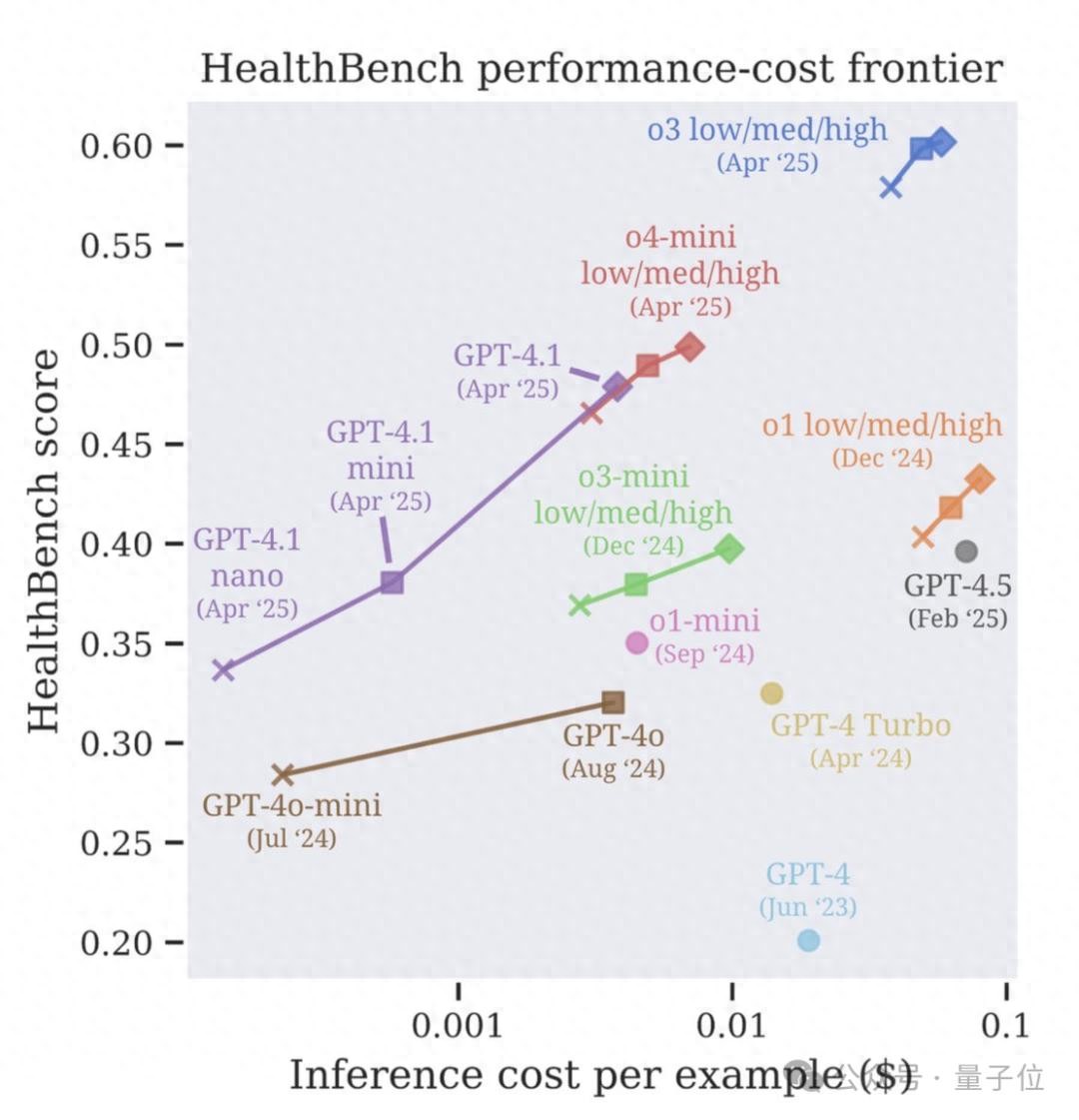
This model was initially announced by OpenAI a month ago, intended solely for API use. However, the demand for it in ChatGPT led to its release in this format. Michelle Pokrass, the lead on GPT-4.1, stated:
“We initially planned to restrict this model to API access, but you all wanted it in ChatGPT!”
Now, Plus, Pro, and team users can select GPT-4.1 from the model dropdown. Enterprise and educational users will gain access in the coming weeks. Free users will see the model labeled as “GPT-4.1 mini” instead of “GPT-4o mini.”
Previously, GPT-4.1 replaced the GPT-4.5 Preview in the API.
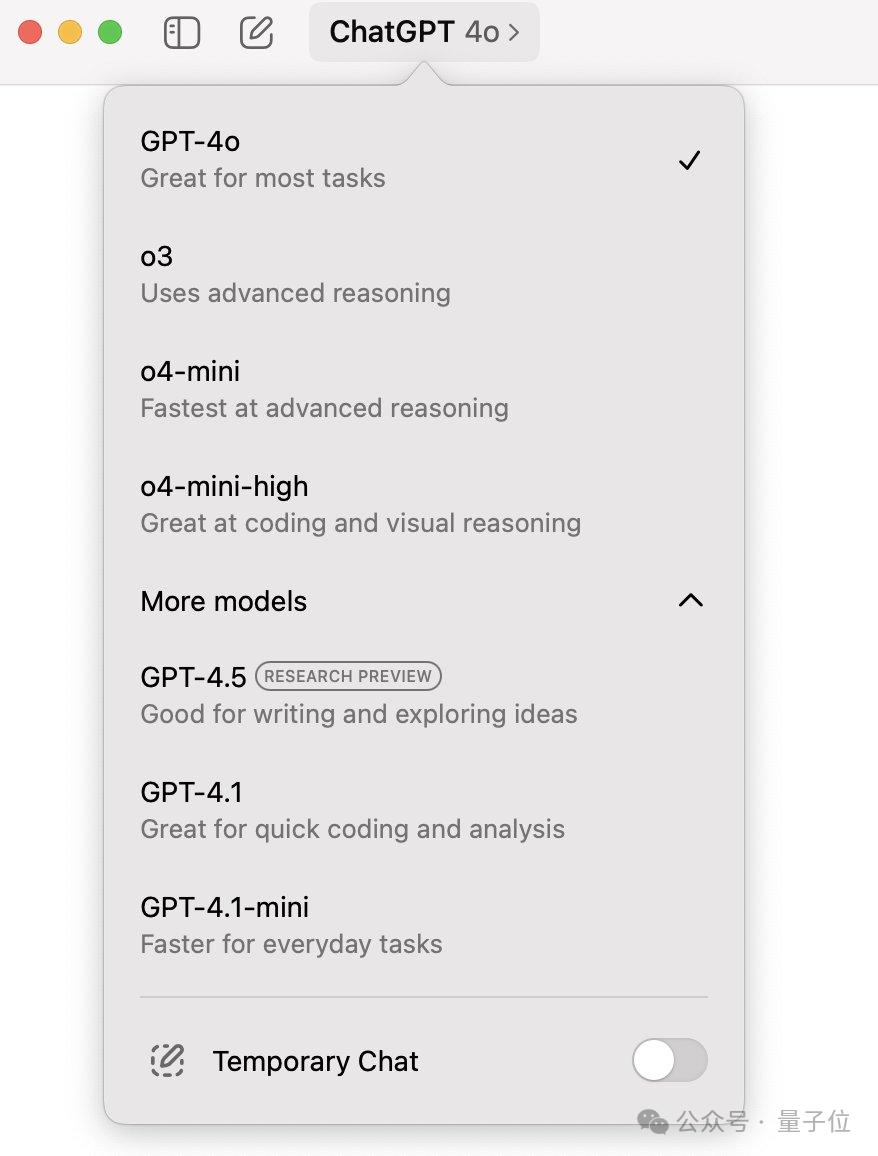
Many users are thrilled to have a faster, better model for AI programming.
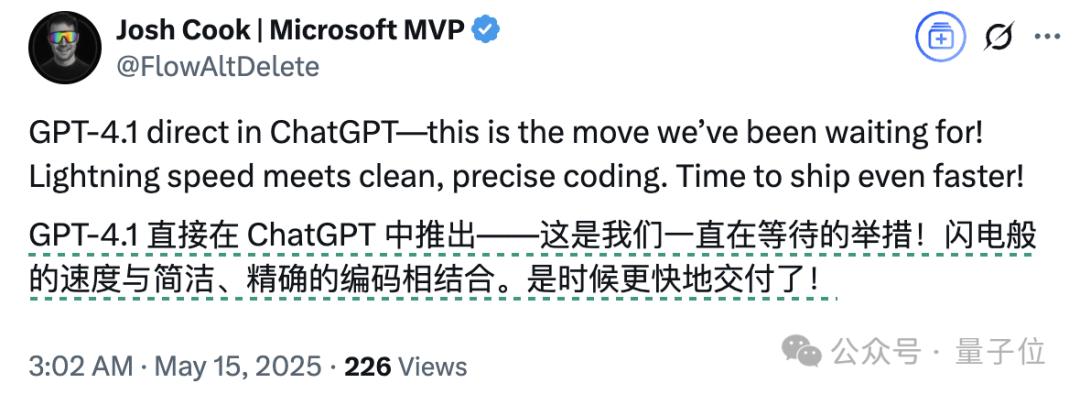
Initial Feedback: Speed is Impressive
The integration of GPT-4.1 into ChatGPT is more convenient than using the API, and many users have started experimenting with it right away. As of the time of this report, there is no official word on the daily message limits for GPT-4.1 in ChatGPT, but some users have noted it seems to match the limits of GPT-4o.
This means free users can use GPT-4.1 up to 5 times every 24 hours, after which it switches to other models; Plus users can use it up to 80 times every 3 hours.
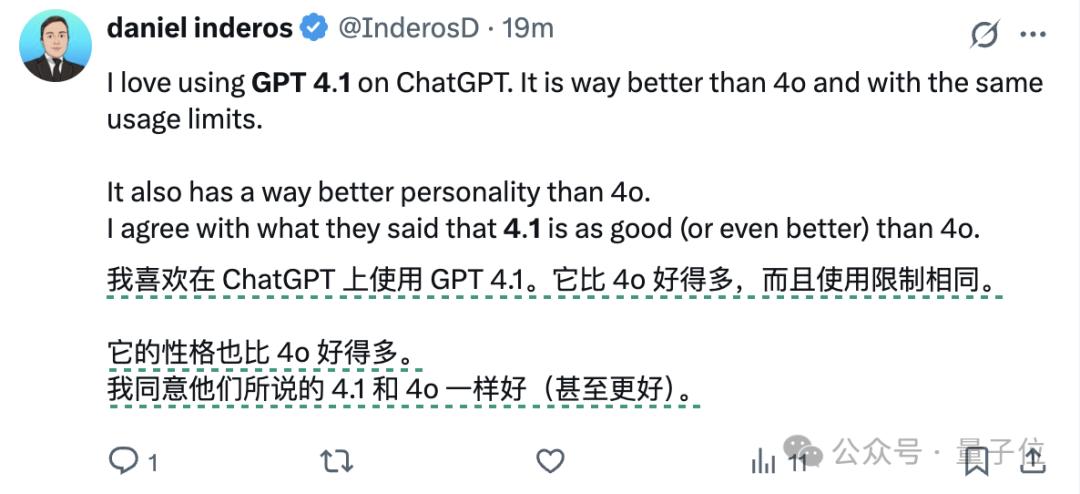
Feedback has highlighted several key experiences:
-
Speed: Users report that GPT-4.1 is significantly faster and smoother than other OpenAI models.
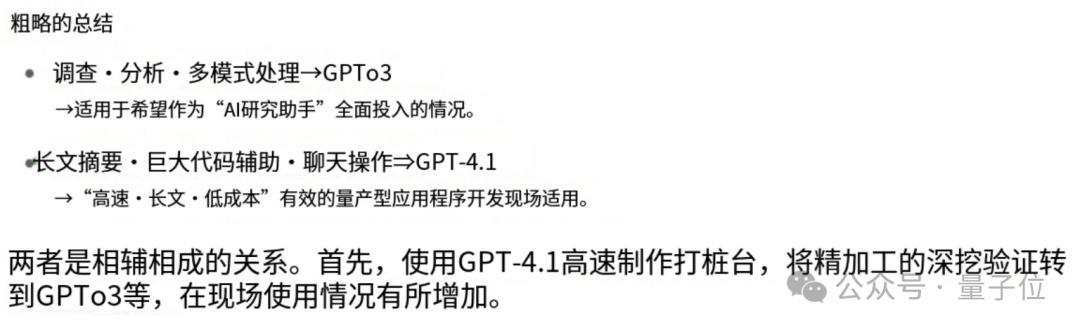
Some users have suggested a method for collaborating multiple models for tasks: using GPT-4.1 to set up a framework and then passing it to another model for review, saving time and boosting efficiency.
Another user tweeted:
“It’s very fast and can complete tasks in one go. Here’s an interactive particle simulation it created.”
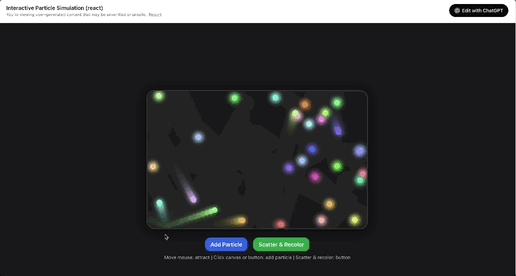
This speed is expected, as OpenAI previously positioned GPT-4.1 nano as the “fastest and most cost-effective model” in their lineup. However, speed is subjective, and users are encouraged to try it themselves and share their experiences.
-
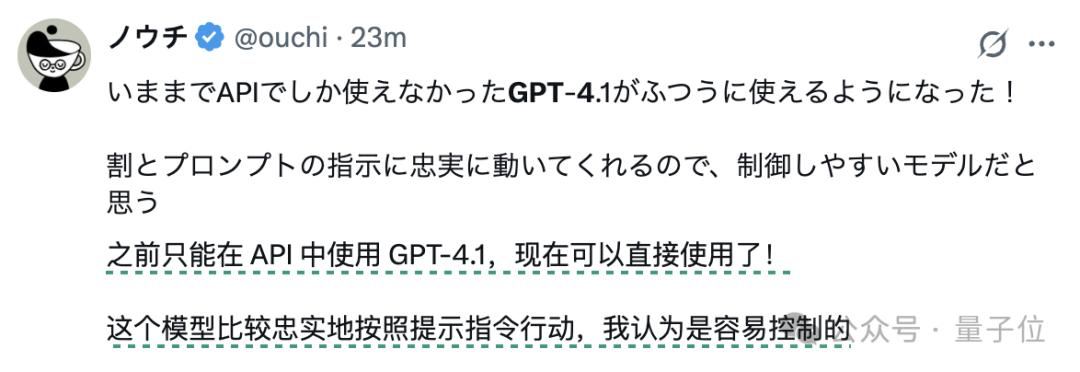
Clear Instructions Needed: This aligns with GPT-4.1’s score of 38.3% in instruction-following benchmarks.
-
Less Flattery: Unlike GPT-4o, GPT-4.1 lacks the excessive flattery that some users found off-putting.

Need for Coding? GPT-4.1 is a Great Alternative to o3 and o4-mini
Exactly one month ago, on April 15, OpenAI released GPT-4.1. It even outperformed GPT-4.5 in a surprising twist.
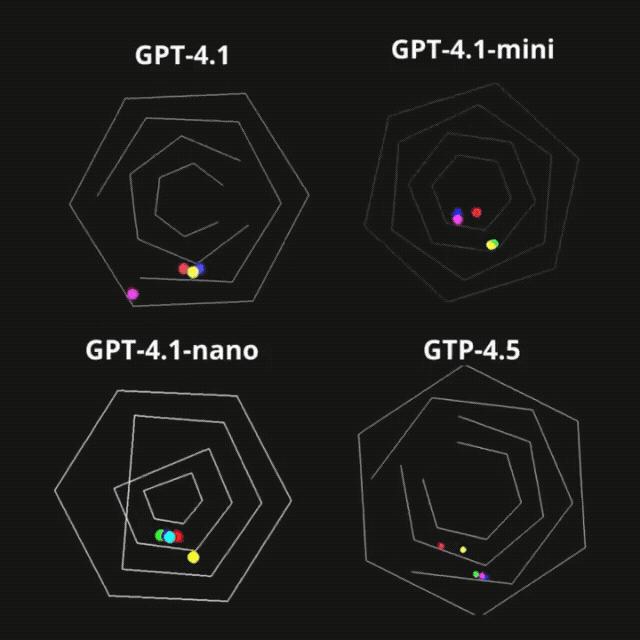
GPT-4.1 comes in three variants:
- GPT-4.1
- GPT-4.1 mini
- GPT-4.1 nano
The following chart compares their performance:
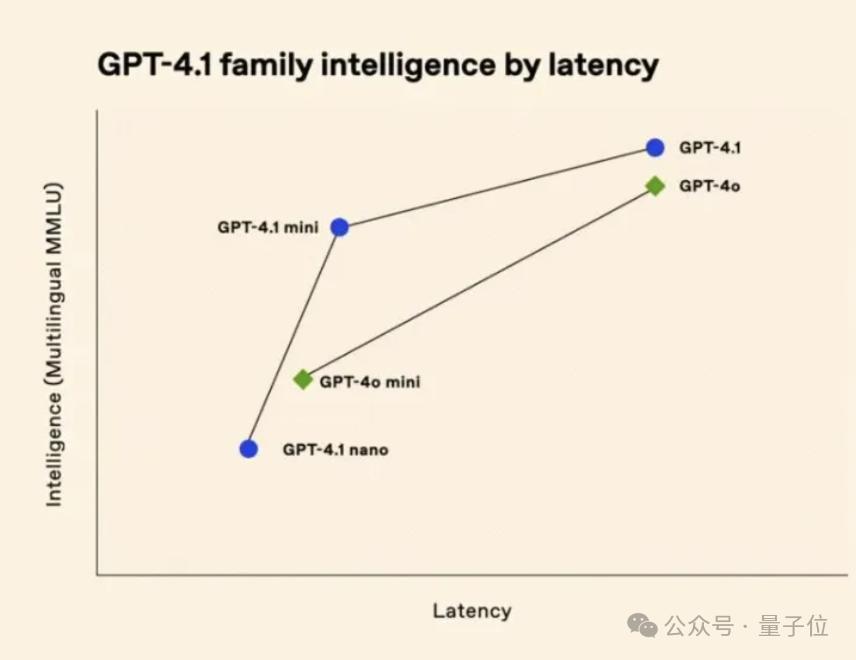
In terms of performance, GPT-4.1 excels with a context window of 1 million tokens across all three models, offering high cost-effectiveness.
Officially, it’s said to be ideal for coding tasks due to its ability to handle longer code files, maintain code coherence, and efficiently debug and fix errors.
Data backs this up: GPT-4.1 scored 54.6% on the SWE-bench Verified, outperforming GPT-4o by 21.4% and GPT-4.5 by 26.6%.
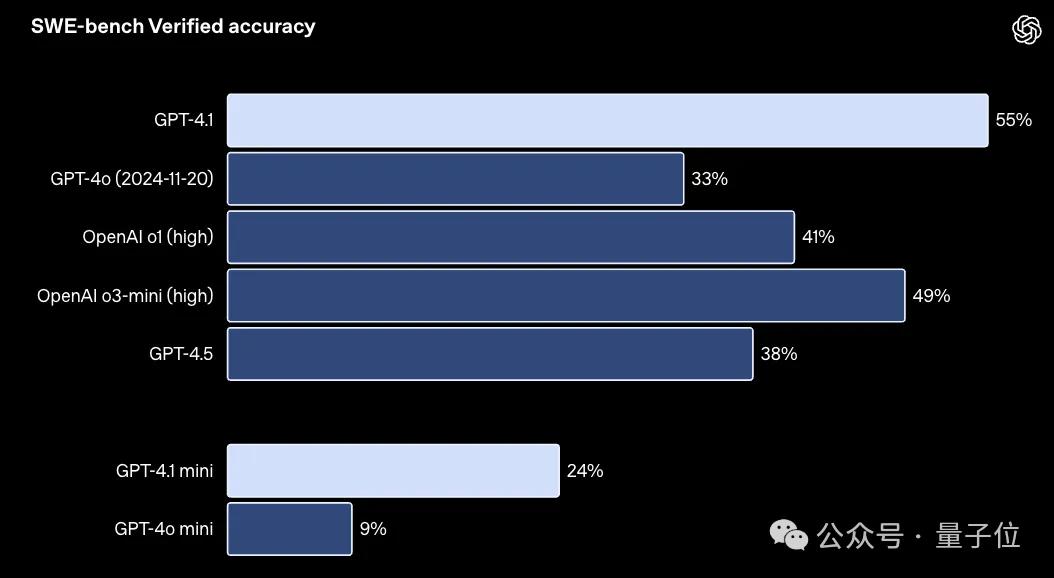
OpenAI has indicated that for everyday coding needs, GPT-4.1 is an excellent substitute for o3 and o4-mini.
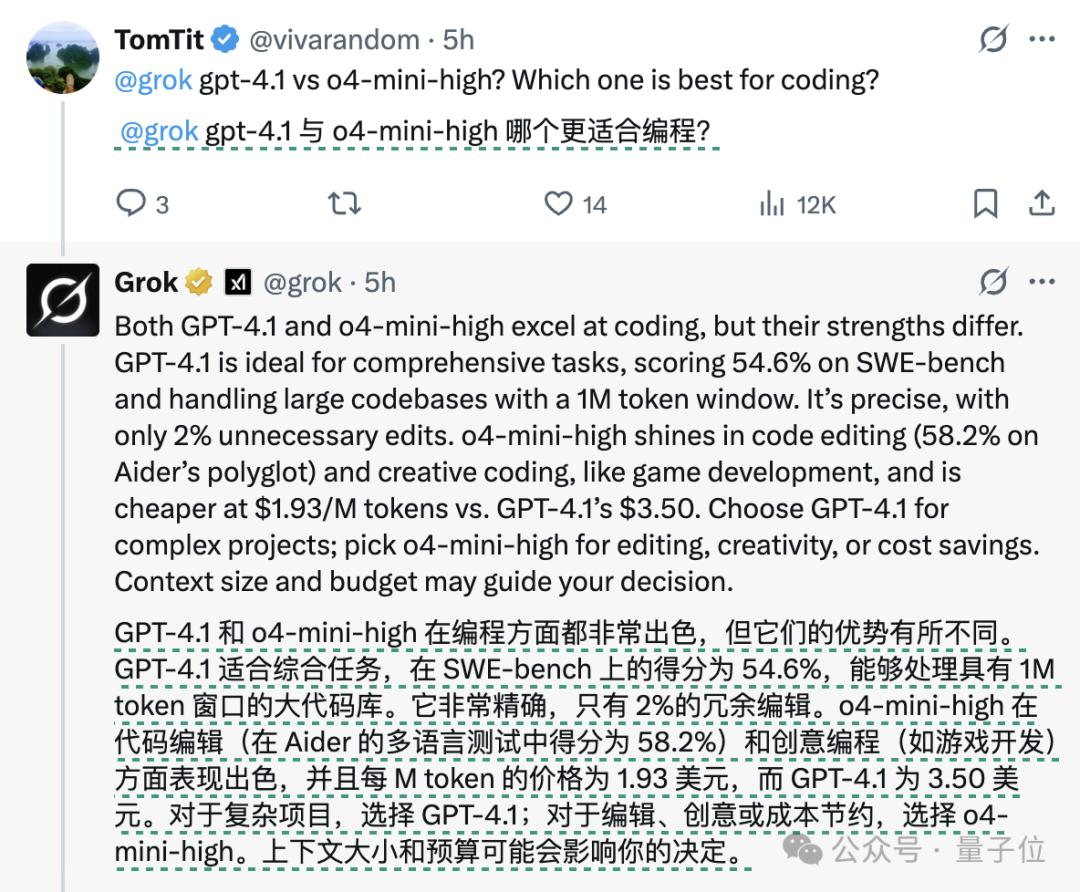
However, some users remain skeptical and have questioned OpenAI on social media about whether GPT-4.1 or o4-mini-high is better for coding tasks. The response indicated that GPT-4.1 is suitable for general tasks, while o4-mini-high excels in code editing and creative programming, albeit at a lower cost.
How to Differentiate and Choose ChatGPT Models?
Across platforms like X and OpenAI’s official tweets, a common theme emerges: many users are confused about the available models and their differences.
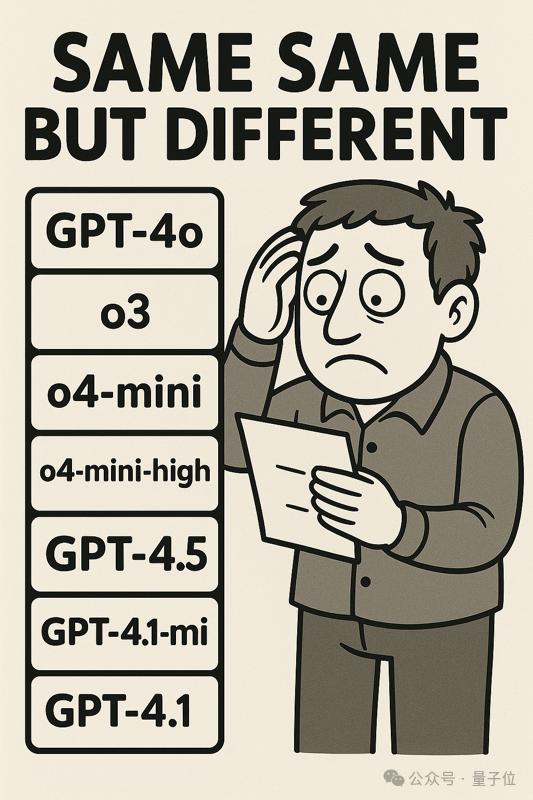
To clarify, we compiled a list of all models available for paid users in ChatGPT and asked ChatGPT to generate a comparison table:
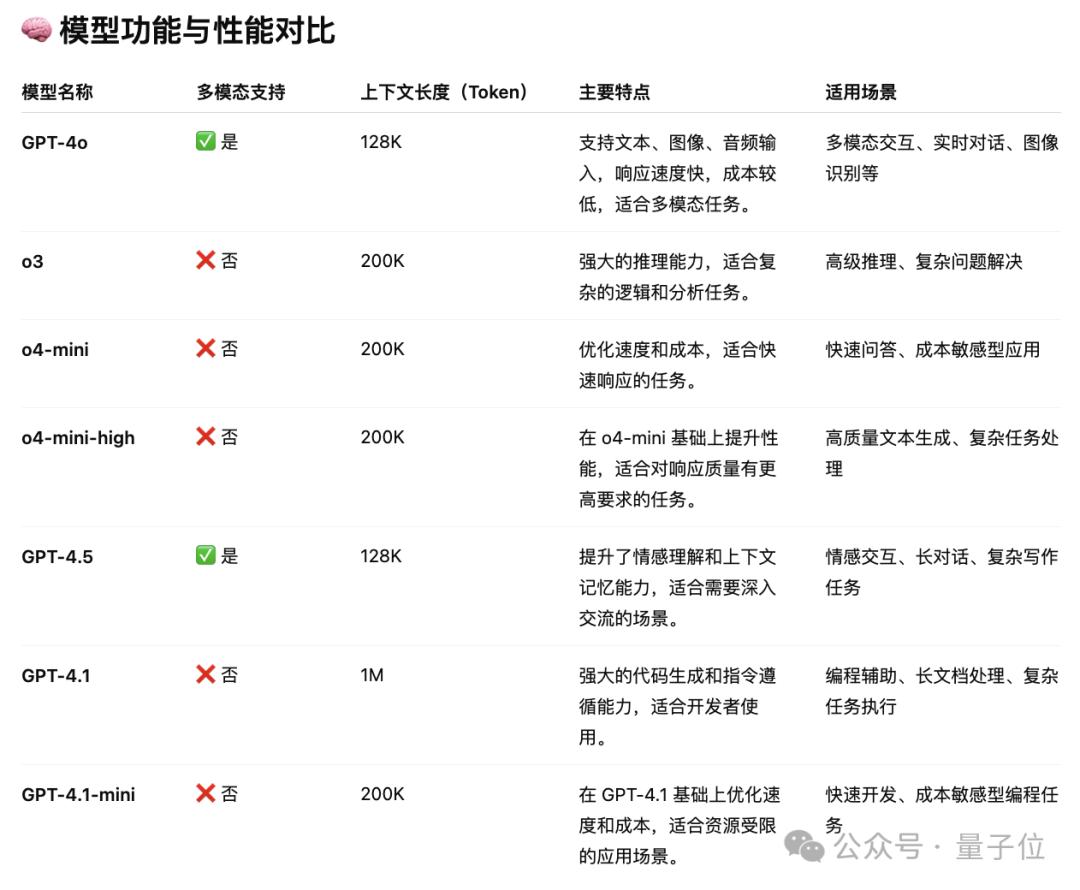
Cost comparisons are also included:
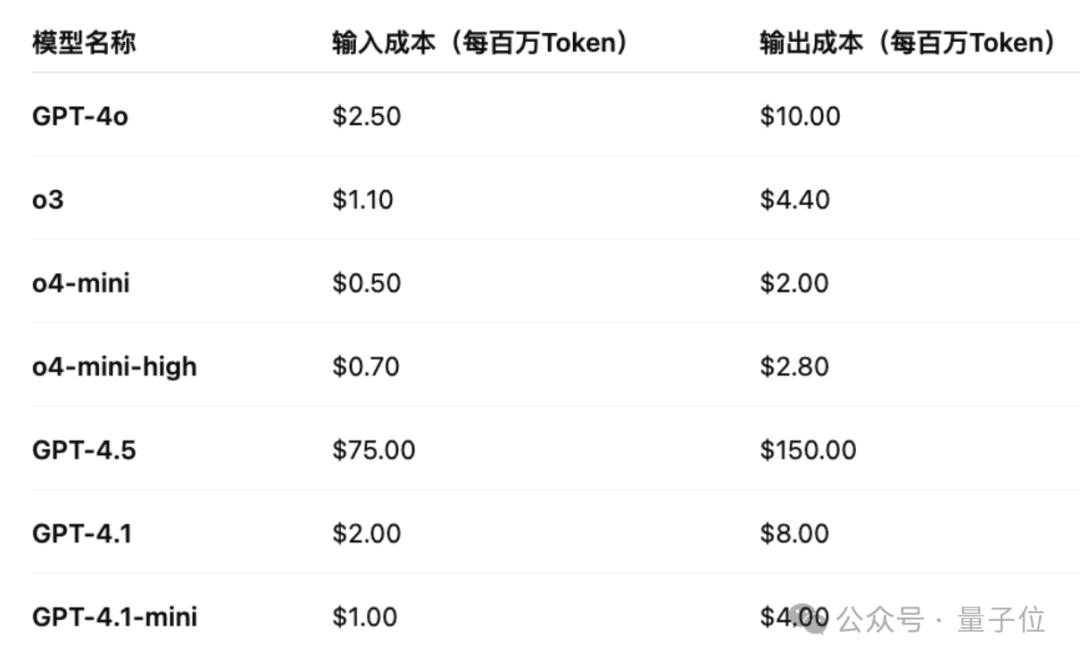
Finally, here are ChatGPT’s personal recommendations on how to select models:
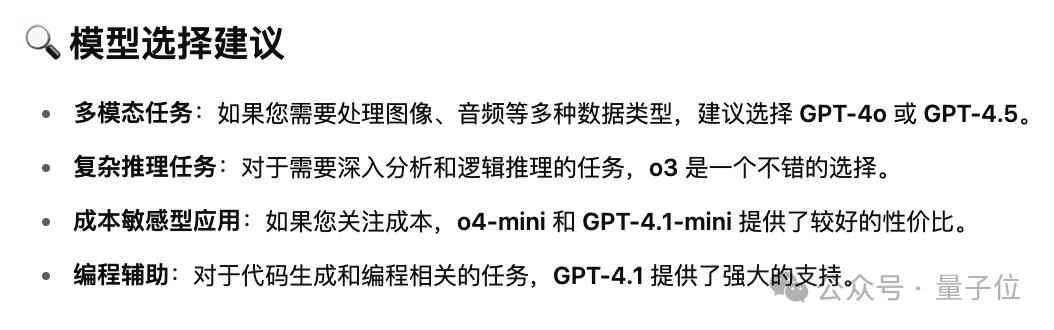
Another point of confusion is the lack of manual model switching for free users. Currently, the default model is GPT-4o, and while OpenAI states that other models like GPT-4.1 mini are available for free users to experience, there’s no clear way to know if they are using them.
When will free users be able to manually switch models? Or at least see which model is generating their results? We hope for improvements in this area!
Comments
Discussion is powered by Giscus (GitHub Discussions). Add
repo,repoID,category, andcategoryIDunder[params.comments.giscus]inhugo.tomlusing the values from the Giscus setup tool.